Two link building packages can promise the same number of placements and still offer very different work. One may include publisher research, original articles, approval before publication and a detailed report. Another may expect you to supply the content and give you only the live URLs.
Choose a package based on the pages you want to promote, the audience you need to reach and the work included, not the link count alone. A site with one strong guide may need a few suitable placements. An agency with several clients may need a monthly process. If your target pages do not yet answer visitors’ questions, improve them before paying to send more people there.
What Is a Link Building Package?
A link building package groups several services into one order or monthly plan. It may cover publisher research, outreach, article topics, writing, placement and a report with live URLs. Some providers manage the full process. Others ask you to supply the content or approve each publisher. Check what the quoted price covers before you compare two offers.
Delivery can mean different things too. A package might promise a set number of published articles, individual placements you choose, or monthly outreach with no fixed placement count. Google uses links to discover pages and understand their relevance, but a live link alone does not tell you whether the article helps readers or whether a paid placement follows Google’s rules. Review the publisher, the article, the destination page and the link terms together.
Check the Page Behind the Link
Open the page you want to promote as if you were visiting it for the first time. Does it answer the question that brought you there, explain what you offer and give you a sensible next step? If not, fix it before buying placements. A relevant publisher can send readers your way, but it cannot explain a service page that hides its terms. Decide what each target page should do: a guide may help someone research a problem, a service page may help a buyer make an inquiry, and original research may give another writer a reason to cite you. Share that purpose with the provider so it can choose articles and publishers that fit.
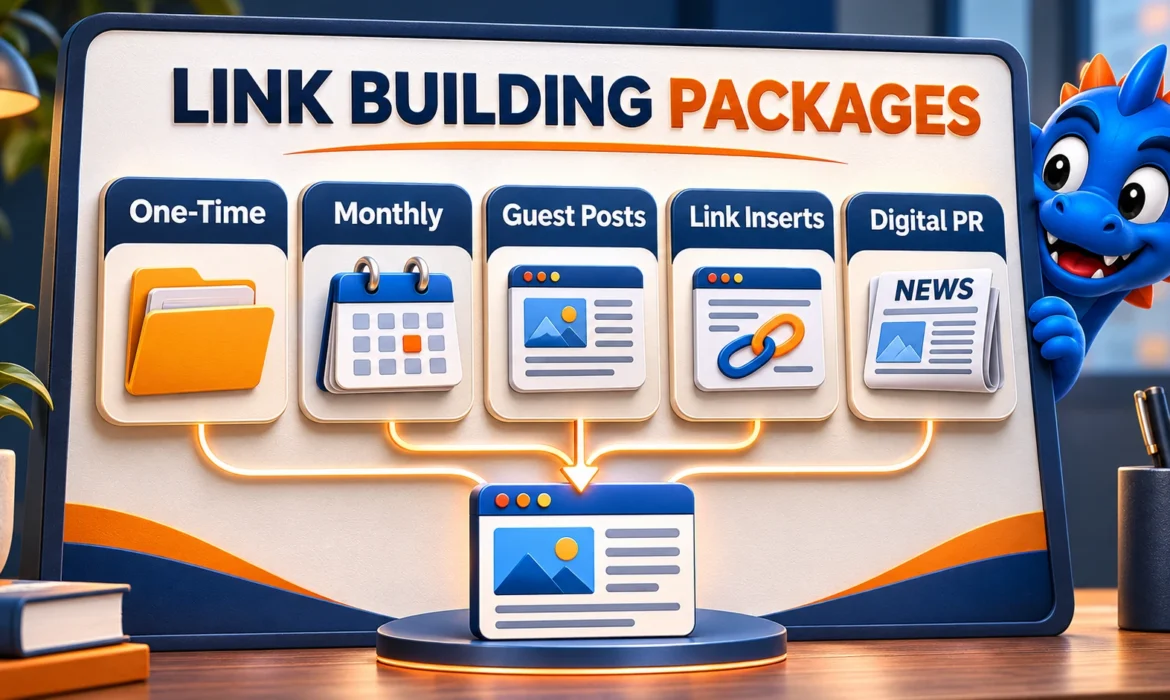
These labels describe different parts of a package. One-time and monthly tell you how often you order. Guest posts, link inserts and digital PR tell you what work is done. White-label describes who manages the client relationship, while editorial work can be part of several package types. A monthly white-label plan, for example, could include guest posts.
One-Time Link Building Packages
Overview
A one-time package gives you a defined order without a monthly commitment. It can suit a business that wants to promote one ready page or test a provider’s process. Check whether the order includes new articles, links in existing articles or both. A smaller first order lets you review the proposed publishers, writing, approvals and final report before you buy again. It can show you how well the provider works, though one short campaign cannot reliably prove its effect on rankings.
Pros
- You can set a clear budget for the order.
- A small campaign lets you review the provider’s process before a longer commitment.
- You can focus on one or two pages that are ready for new visitors.
Cons
- A short order may give you limited publisher choice.
- One campaign may not suit a site with several priorities.
- A live link report cannot prove that the order caused a later ranking change.
Best fit: A business with a strong target page that wants to assess a provider or complete a limited campaign.
Monthly Link Building Packages
Overview
A monthly package gives your team a regular schedule for publisher research, content and placements. It can suit a business with several pages ready to promote or an agency managing multiple clients. The schedule should still leave room to change direction. If a target page needs an update, fix it before sending more readers there. Ask whether you can switch priority pages between months and what happens when outreach takes longer than expected or a placement moves into the next billing cycle.
Pros
- Regular delivery can make budgeting and review easier.
- The team has time to plan topics around several target pages.
- A continuing relationship can reduce repeated briefings.
Cons
- A fixed quota may encourage placements that do not fit the site.
- You may pay each month even when your destination pages need work first.
- Terms for pauses, cancellations and delayed placements can vary.
Best fit: A site with several useful pages ready for promotion or an agency that needs a consistent process across clients.
Guest Post Packages
Overview
A guest post package places a new article on another website and may cover the publisher search, topic pitch, writing, revisions and publication. Check which of those steps the price includes. The article should answer a question the host site’s readers care about, with your link added where it helps them. Ask whether you can approve the publisher, review claims about your business and see who handles editor requests. A promised word count tells you how long the article may be; it does not tell you whether anyone will want to read it.
Pros
- A new article can address a subject that matters to the publisher’s audience.
- You may have a chance to review the topic and business claims before publication.
- The article can introduce your expertise to readers who have not heard of your company.
Cons
- Research and editorial review can take time.
- A generic article may give readers no reason to follow its link.
- A package may count the article as delivered even if its publisher is a poor fit.
Best fit: A business with a subject worth explaining to another publication’s readers and a destination page that continues that explanation.
Link Insert Packages
Overview
A link insert adds your link to an article that is already live. It works best when your page supplies something the article needs, such as a source, tool or fuller answer. Read the proposed article before you approve it. Check whether its information is still accurate and whether your link fits the paragraph around it. The article’s age does not make the placement valuable on its own; a reader should have a clear reason to follow the link.
Pros
- You can assess the existing article before the link is added.
- The placement may fit a page that already covers your subject.
- There is no need to create an entirely new guest article.
Cons
- You have less control over the article’s wider content.
- The publisher may later edit or remove the surrounding paragraph.
- A forced insert can look out of place even on a relevant website.
Best fit: A business with a strong guide, study or tool that adds genuine value to an existing article.
Editorial Link Packages
Overview
Editorial packages usually put more attention on the publication, the story and the context of the link. The term can mean different things to different providers, so ask what the specific service includes. It may involve a new article, a relevant mention within existing content or outreach around a useful resource.
This approach can suit a business that wants fewer placements with a closer match to its subject. GrowLinko’s Platinum Editorial Links option is one service to review if this is your priority. Check its current deliverables and approval process before deciding whether it fits your page.
Pros
- Publisher and topic fit receive more attention.
- A strong article can introduce your business in useful context.
- You can assess each placement for reader value as well as delivery.
Cons
- Editorial work may take longer than a simple placement order.
- A higher-priced option still needs publisher and content checks.
- No provider can guarantee that an editorial placement will change a ranking.
Best fit: A team with a strong destination page and a subject that deserves careful editorial placement.
Digital PR Packages
Overview
Digital PR gives journalists and publishers a reason to cover your business through a useful story, original data or informed comment. A provider may shape the angle, prepare materials and contact relevant publications, but editors decide whether to use them. That makes the number of mentions or links less predictable than a fixed placement order. This approach suits a business with something specific to contribute. A general announcement that the company exists is rarely enough to interest an editor.
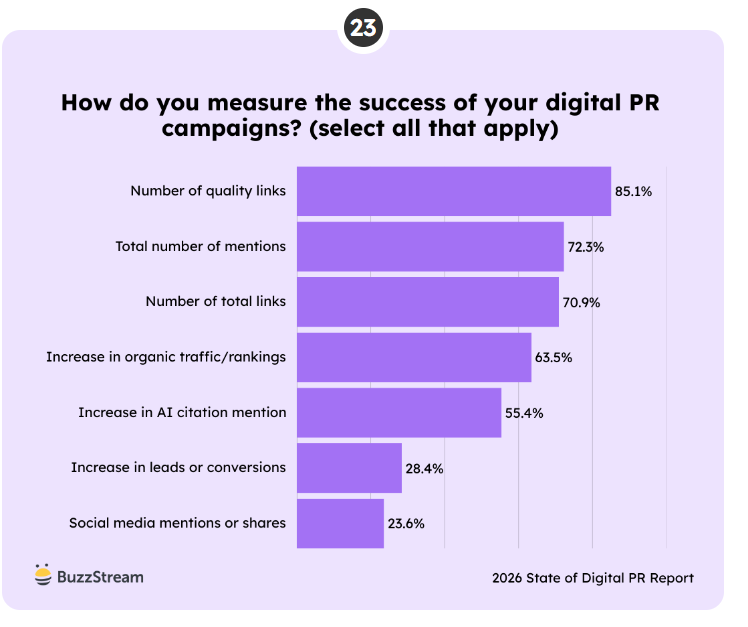
BuzzStream’s 2026 survey shows how digital PR teams measure campaign success. Quality links lead the list, but mentions, traffic and leads are also measured. Source: BuzzStream
Pros
- A strong story can reach readers beyond a narrow SEO audience.
- Coverage can introduce the brand even when an article does not include a link.
- Original information may give other writers a reason to reference the business later.
Cons
- Publisher decisions are outside the provider’s control.
- Coverage and links may vary from one campaign to another.
- Research and preparation can require substantial input from your team.
Best fit: A business with a credible story, useful data or genuine subject expertise that can support publisher outreach.
White-Label Packages for Agencies
Overview
White-label link building lets an agency buy delivery support for its clients while managing the client relationship itself. The provider may handle outreach, content and placement under an agreed workflow. A good arrangement should make it clear who approves publishers and who answers questions when a placement changes.
An agency needs more than live URLs. It needs reports it can review, accurate delivery records and a process that protects each client’s brief. Ask how the provider keeps publisher choices and target pages separate across accounts.
Pros
- Your team can support more campaigns without building every outreach process in-house.
- A repeatable workflow can make approvals and reporting easier.
- Editorial and placement work can continue while your team handles strategy.
Cons
- Poor communication can leave your agency answering for work it could not review.
- Standard package tiers may not fit every client or industry.
- You remain responsible for checking the work before sharing it with a client.
Best fit: An agency with a clear client strategy that needs reliable help with research, content or publisher coordination.
Which Package Type Fits Your Goal?
| Your situation | Type to consider | First thing to check |
|---|---|---|
| You want to assess a provider with one ready page | One-time package | Publisher approval and sample reporting |
| You have several pages ready for regular outreach | Monthly package | Ability to change priorities |
| You have a useful subject for another audience | Guest post package | Article quality and host-site fit |
| You have a strong resource that adds to an existing article | Link inserts | The exact page and surrounding paragraph |
| You want closer review of each publisher and story | Editorial package | What editorial work the price includes |
| You have original data or a credible news angle | Digital PR | How success is defined without fixed links |
| You manage delivery for several clients | White-label package | Approvals, separation and client-ready reports |
The table narrows the field. It does not replace a review of the actual proposal. Providers use these labels differently, so ask for the deliverables in writing.
What Changes the Price?
The number of placements affects the quote, but it does not explain the whole price. One package may include publisher research, outreach, article writing, edits and reporting. Another may expect you to provide finished articles. A narrow industry or a specific audience can also take more research to match with suitable publications. Compare what the provider will do before you calculate a price per link. A higher domain metric alone does not explain why one option costs more.
GrowLinko’s link building packages give you options to compare. Ask which pages each option would support, who handles the content and how the publishers are chosen. Check the service page for current prices and terms when you order, since those details may change.
Illustrative example, not actual package terms
Two quotes. Five placements each.
The link count is the same. The work included is not.
Quote A includes
- Publisher research and review
- Article writing and revisions
- Approval before publication
- Report with live URLs
Quote B needs clarification
- You supply the finished articles
- Publisher approval is unclear
- Revision costs are not stated
- Replacement terms are not stated
Compare the work behind the five links before you compare the price.
What Does Dofollow Mean in a Paid Package?
Dofollow usually means the link has no nofollow or sponsored attribute. If a package promises dofollow links from articles you pay to place, ask how the publisher will mark them. Google’s link spam policy treats links bought to influence rankings as spam and says paid links should use rel="sponsored" or rel="nofollow". It prefers sponsored for paid placements. An independent editorial link is a different arrangement. A paid article may still reach relevant readers, but it should not be sold as guaranteed ranking credit. Get the link terms in writing before you order.
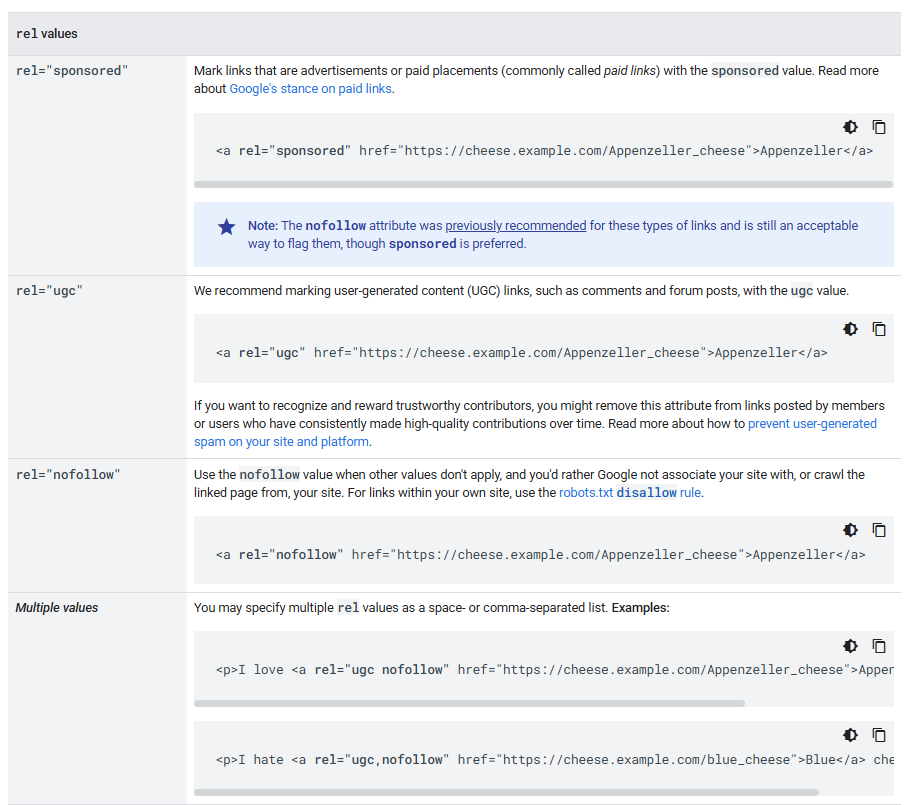
Google recommends rel=”sponsored” for paid links. It also accepts rel=”nofollow”. Source: Google Search Central.
Can a Package Guarantee Rankings?
A provider can guarantee work it controls, such as the agreed articles, published placements and a report with live URLs. It cannot guarantee a Google position. Rankings can change for reasons beyond one campaign, including updates to your site, competing pages and changes in search results. Ask what the package guarantee actually covers. If a post disappears, will the provider restore it, replace it or refund it? How long does that promise last? Get those terms in writing. A clear delivery guarantee gives you something you can check; a promised ranking does not.
How Many Links Does Your Site Need?
No fixed number works for every site. A business with several useful pages may have more reasons to seek relevant coverage than one whose only target page still needs work. Ask the provider why it recommends that order size: which pages would receive links, what kinds of publishers could cover them and how will your team review the placements? A competitor’s referring-domain count can provide context, but it cannot set your quota on its own. Start with an amount you can assess properly. More live URLs have little value if nobody checks the articles or the pages they lead to.
What Should You Approve Before Publication?
Check the publisher, article and destination page before anything goes live. The site should reach a relevant audience, the article should help its readers and your page should deliver what the link promises. Review claims about your business and agree on how major edits will be approved. The link text should also describe the destination naturally, as Google recommends.
What Should the Final Report Show?
The report should list each live article, its publisher and the page its link reaches. Open the URLs yourself. Check that the article appears on the approved site, the link sits in the agreed context and its treatment matches the order. Keep the publication date and any replacement terms with the report so you know what to do if a link later disappears.
Then check what happened after publication. Referral visits show whether readers followed the link. Search Console can help you watch relevant queries for the target page. Note any other changes to your site during the campaign; a ranking gain alone cannot show which link caused it.
Choose the Work, Then the Tier
Compare two proposals without their tier names. One may offer more links; the other may give you stronger publisher checks, clear writing responsibilities and a report you can verify. Choose based on the pages you need to support and why each placement belongs on its publisher. Once you know what work will be done and how you will check it, the link count becomes useful.