A backlink can help your page get found. It cannot make an AI tool cite it. That is the short answer to whether backlinks help AI search visibility.
Google uses links to discover pages and understand their relevance. A link from a useful article can also send people to your site. Those benefits may help a strong page gain visibility, but an AI result still depends on the question and the information your page provides. So before you buy a placement, read both sides of the link: the article that carries it and the page it leads to. If neither would help a reader without an SEO score attached, the backlink has a bigger problem than AI visibility.
A Link Should Belong There
A kitchen designer earns a link from an article about renovation costs. A reader checks the price of new cabinets, wants design advice and follows it. The next page fits what they were already looking for. Put the same link in an article about mobile phone plans and that reason disappears. The link still exists, but a high domain score cannot make it useful to that reader.
Google uses links to find pages and understand their relevance. That is why the article around a link matters as much as the metric attached to its website. GrowLinko’s guide to white hat link building looks at relevant outreach and content that gives readers a reason to click. A good placement should pass a simple test: would this link still make sense if nobody could see its SEO score?
The Click Is Only the Start
A backlink can bring a buyer to your guide, but the guide has to help them once they arrive. If someone wants to choose a guest post site, advice to pick one with high authority leaves the hard part to them. Show how to check the site’s topic, recent posts, search visibility and publication terms instead. That gives the buyer a way to judge the offer and gives an AI tool clearer details to use if it cites the page. More links to a vague guide only send more people to the same dead end.
Do Backlinks Help With AI Overviews?
Backlinks may help a page become easier for Google to discover and understand. Google also says its usual SEO practices remain relevant to AI Overviews and AI Mode. To appear as a supporting link, a page must be indexed and eligible to appear in Search with a snippet. A backlink can support the work that gets a page found, but it cannot guarantee a place in an AI answer. Google explains these requirements in its AI features guidance.
Once a page is eligible, the person’s question matters. A well-linked article about the history of guest posting may help with a history question. It may be a poor source for someone who wants to know how to check a publisher before paying. Google says sources in its AI results are chosen for their usefulness to the question. There is no published formula that turns a set number of backlinks into AI citations.
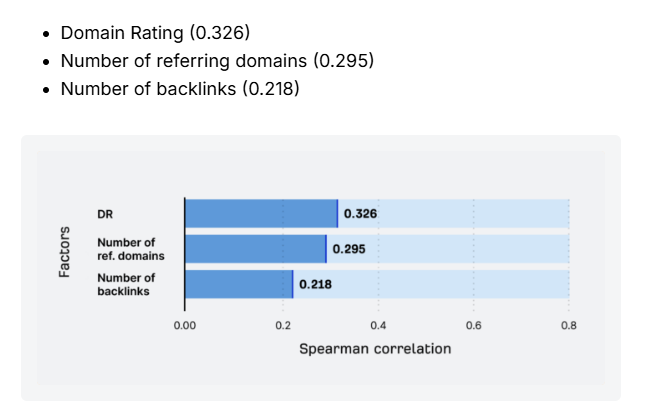
Source: Ahrefs analysis of 75,000 brands. Link metrics showed a weak correlation with AI Overview brand mentions.
When a High Score Misleads
A website can look excellent in an SEO tool and still be the wrong place for your article. Read its recent posts. If a legal guide would sit among unrelated product promotions, ask who would read it and why they would follow its link. A smaller legal publication may reach fewer people overall but offer an audience that already cares about the subject. It still needs a content and terms check. The domain score starts the review; it cannot finish it.
GrowLinko’s guest posting packages let buyers compare options such as site metrics and article length. Use those figures to narrow the choice, then ask what the proposed publisher normally covers, how the article will fit, and what the placement includes. The best-looking number on a package is not always the best home for your article.
One Screenshot Proves Very Little
An AI tool mentions your brand a week after a guest post goes live. It is tempting to credit the new backlink, but the screenshot cannot show what caused the mention. The tool may have used your service page, a review or several sources together. Change the question and the cited pages may change too. Record the exact question, date, cited URLs and visits that follow, then check again over time. A pattern may emerge. One screenshot is a useful observation, not proof that a placement bought an AI citation.
Make the Click Worth It
Someone who follows a backlink to your service page wants answers: Who writes the article? Can they approve the publisher? What happens after publication? Put those details where a buyer can find them. A guide needs to deliver on its promise too. If it claims to help readers choose a guest post site, show them how to check recent articles, topic fit and publication terms. Explain that traffic figures are estimates and that a domain score cannot tell them who reads the site.
The link itself should set the right expectation. Google recommends clear anchor text that fits the sentence around it. A phrase such as how to choose a guest post site tells readers where they are headed. A sales keyword forced into an unrelated article gives them no good reason to click.
What Are You Paying For?
A paid article can put your business in front of a publication’s readers, but payment cannot guarantee a higher ranking or an AI citation. Google’s link spam policy treats links bought to influence rankings as spam. It says paid links should use rel="sponsored" or rel="nofollow", with sponsored preferred for paid placements. That is why the terms matter: ask who selects the site, who writes and reviews the article, whether you can approve the topic, and how the publisher will mark the link. Those answers tell you what the service delivers and whether the placement makes sense for its audience. A promise of instant AI authority tells you none of that.
Show the Work Behind the Placement
GrowLinko outlines its publisher review, editorial checks and campaign reporting on its About page. Those steps become useful to a buyer when they apply to the site on offer. Why does that publisher fit the buyer’s topic? Do its recent articles suggest a relevant audience? What happens if the post changes or disappears? GrowLinko’s service pages should answer the same kind of questions about each package, including what its word count range covers and what a site metric does not tell the buyer. Whether someone arrives from Google, an article on another site or an AI response, they should be able to see why the placement makes sense.
What Happened After the Link Went Live?
Set a goal before the article is published, then check what it actually brings. A placement meant to reach a publication’s readers should produce relevant visits or inquiries. If you also want to track search visibility, watch the destination page’s queries in Google Search Console and note any other changes you make to that page. To assess AI visibility, save the questions you test, record when a tool cites your page and check whether those citations send visitors. A mention is interesting, but it is not the same as a lead. One article that brings a few serious buyers can be worth more than a report full of links nobody follows.
Read It Like a Buyer
Before you approve a placement, set the SEO metrics aside and read the publisher’s article. Would its link help you understand the topic, or does it feel dropped in? Follow it to your own page. Does that page answer the question the article raised? Backlinks can help a useful page get found, and an AI tool may cite it when it fits a question. The link makes the introduction. Your page has to give people a reason to stay.