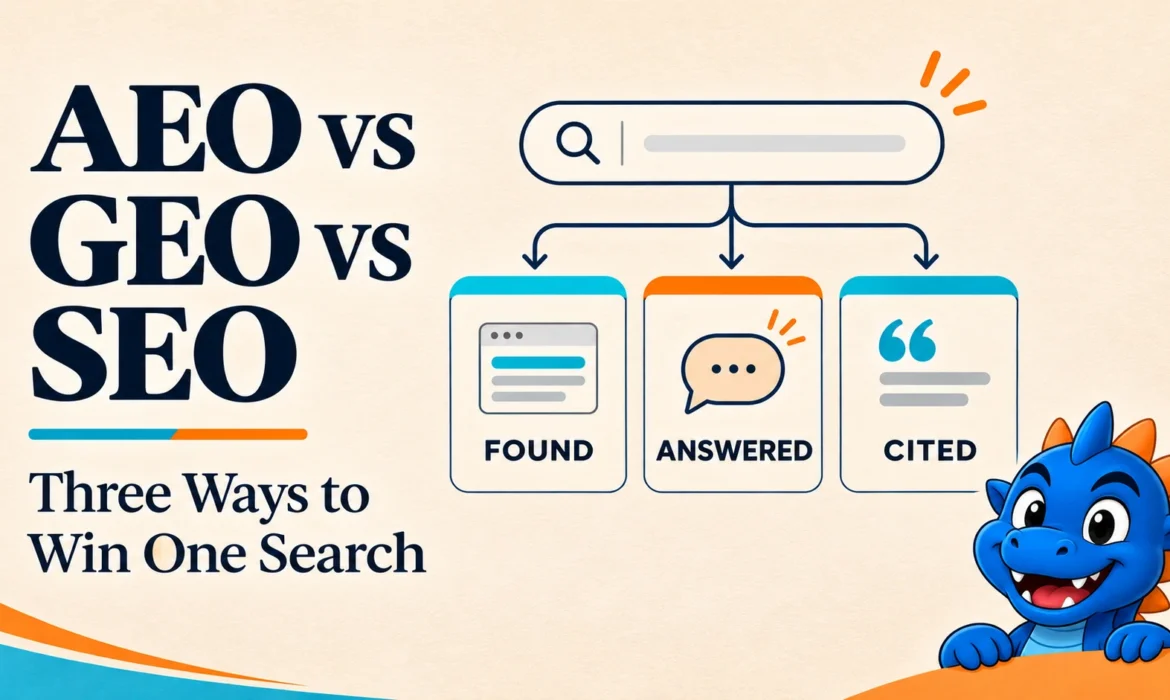
SEO helps people find your website. AEO helps your content answer their questions. GEO helps AI search tools understand and cite your information. The real difference is what happens after someone searches: they may click a result, read an answer on the search page, or ask an AI tool to compare their options. A strong page can serve all three paths. If a buyer asks how GrowLinko selects guest post sites, the page should give the answer upfront, explain the checks behind it, and show what those checks mean for the buyer. That gives people a reason to trust the page and use it to make a decision.
SEO Gets the Right Page Found
SEO helps search engines access, understand, and show your pages for relevant searches. It covers page content, site structure, internal links, and the experience people have after they click. A guest posting agency, for example, needs a service page that explains its offer to potential buyers. It may also need a guide that helps people judge the quality of a guest post site. The pages serve different needs and should link to each other where it helps the reader.
A ranking only helps if the page answers the search. Someone who looks up guest post prices expects more than a contact form. The exact cost may depend on the website, article length, and work included, but the agency can explain those factors. That gives the reader useful information before they make an inquiry.
AEO Gives the Answer First
AEO stands for answer engine optimization. The idea is simple: when someone asks a question, make the answer easy to find. If a buyer asks, “How long will my guest post stay live?”, they should see the agency’s actual policy near the top of the page. Don’t make them walk through a history of backlinks to find it. The next few lines can explain what the guarantee covers and what happens if a post disappears.
A direct answer still needs enough detail to be useful. Is a high DR site a good guest post choice? Maybe, but DR alone cannot tell you. Check whether the site covers your topic, attracts relevant search traffic, publishes credible articles, and has clear editorial standards. The first sentence answers the question. The rest helps the buyer avoid an expensive guess.
GEO Makes Your Content Worth Citing
GEO stands for generative engine optimization. It focuses on how AI search tools find and use information when they put together an answer. If someone asks an AI tool how to choose a guest posting service, it may draw from several websites. “We offer premium websites” gives it little to work with. What does premium mean? The word sounds good, but it tells the buyer almost nothing.
A useful page shows its work. It explains how the agency checks a site’s topic, recent search traffic, article quality, and placement terms. Those details help a buyer judge the offer and give an AI tool specific information it could cite. A citation is never guaranteed; responses can change with the question and the sources available. The practical GEO goal is to make your page a source worth using.
The Empty Chair Test
Picture a buyer with three agency pages open. They have not spoken to anyone yet. All they can judge is what each page tells them.
Tab one
“Premium websites”
It sounds good, but the page never explains what premium means.
Tab two
A high domain score
One number is visible. The site’s readers, content, and terms are still a mystery.
Tab three
The checks behind the choice
The agency explains what it reviews, which sites it rejects, and why.
Which page would you trust with your money?
Now change who sits in the chair. The same page faces three different tests:
Search engine
SEO gets the page found
Can it identify the page and show it for a relevant search?
Person in a hurry
AEO gives the answer
Can the buyer find the answer in ten seconds?
AI search tool
GEO gives it a source
Are the details clear and specific enough to support an answer?
Try it on your service page
- Can a buyer tell what is included without sending an email?
- Can they see how you select or reject a website?
- If you promise a live post, can they find out what happens if it disappears?
The most useful fact about your service may be the one you forgot to explain.
The Difference on One Page
A buyer can reach the same GrowLinko page through a search result, a direct answer, or a link in an AI response. The page needs to do something useful at each point:
SEO
Get found
Make the guest posting service page easy to find when someone searches for a provider. Show what the service includes and who it suits.
AEO
Answer the question
Explain how GrowLinko checks a website. Give the answer early, then show the criteria a buyer would want to know.
GEO
Give AI something solid to cite
State the site checks, terms, and limits clearly. Specific facts make the page more useful to buyers and possible AI sources.
Show Buyers How You Choose Sites
An article about choosing a guest post site should help a buyer judge a placement before paying for it. Explain why one metric cannot settle the choice, then show what to check: topic fit, recent articles, search visibility, and publication terms. GrowLinko can make the advice more useful by showing how its team applies those checks and where each measure has limits. Traffic figures are estimates, and a domain score cannot tell you whether real readers care about a site’s content. Once readers know what a sound choice looks like, a link to the guest posting service gives them a natural next step.
Match Each Heading to a Real Question
A heading should tell readers what they will learn in that section. “Does a Higher DR Mean a Better Site?” works if the paragraph answers it straight away: a higher score may help with comparison, but it does not prove that a site has relevant readers or sound editorial standards. “Understanding the Importance of Quality” gives no clue about what to check. A clear statement can work just as well as a question. “Traffic Can Hide a Poor Topic Match” sets up a useful point: a busy general site may still be a poor home for a specialist legal or health article.
Give the point enough space to make sense. A narrow question may need one solid paragraph; a choice with trade-offs may need two. If a section says topic fit matters, show what that means. A home improvement article belongs on a site whose readers care about homes, even if another site has a higher metric. The example does more work than another broad claim about “quality,” and it helps readers apply the advice to their own placement.
If Google Gives the Answer, Why Click?
Sometimes there is no reason to click. If someone asks what AEO stands for, an AI Overview may give them all they need. A buyer has harder questions. Does the guest post price include writing? Can they approve the website first? What happens if the post goes offline? A short answer in search cannot settle those details. Google’s AI features guidance says AI Overviews can link to pages that help people explore a topic further.
Give readers something worth opening the page for. Explain what affects the price, walk through a real site review, or spell out what a live-post guarantee covers. Let the question decide how much space it needs. Google says there is no ideal page length for AI search, so there is no need to chop a useful explanation into tiny pieces. If a buyer leaves with a clearer choice than they had on the search page, the click had a purpose.
Can ChatGPT Search Find Your Pages?
Check whether your site allows OAI-SearchBot, the crawler OpenAI uses to surface pages in ChatGPT search. It is separate from GPTBot, which relates to possible use of content for model training. OpenAI explains both in its crawler documentation. Access alone will not earn a citation, though. If your service page lists a word count range, a site metric, or a guarantee, explain what each one means. Give buyers the details they need, and an AI tool has a clearer source to work from.
Let Buyer Questions Shape the Plan
Start with what buyers ask in sales emails and calls. Who writes the guest post? Can the client approve the website? How long does publication take? What happens if a link changes? Put short answers on the service page where buyers can find them. If a question needs examples or a closer look, give it a guide of its own. A site-quality guide, for instance, can show how to check relevance and recent search traffic, then link to GrowLinko’s guest posting service when the reader wants help. The service page can link back for buyers who want to see how sites are assessed.
That is how a topic ecosystem becomes useful. The main AEO vs GEO vs SEO article explains the difference; follow-up pages should solve new problems. One could show how to track visits from AI search. Another could improve the answers on a service page. A third could help buyers spot a guest post site with real readers. Each page should earn its place by answering something the main article cannot cover properly.
Look Past the Citation Count
Rankings, clicks, and AI citations show where a page appears, but an agency also needs to know whether it brings the right customers. Check Google Search Console to see which searches lead to the page, then look at which visitors reach a service page or send an inquiry. OpenAI says ChatGPT search links include utm_source=chatgpt.com, which can help identify those visits in analytics (source). Compare that traffic with actual leads and sales. Ten buyers who understand your offer may be worth more than a thousand visitors who leave after reading a definition. If clients still ask a question your page was meant to answer, move the answer where they can find it and make it clearer.
One last check
Would you buy from your own page?
Open your service page as if you have never heard of your agency. Can you find the price factors, the site checks, and what happens if a post disappears? If you need to email your own team for the answers, your buyers probably do too.
SEO can get the page found. AEO can put the answer up front. GEO can give AI tools clear facts to work with.
The algorithm may find your page. The buyer still has to believe it.